
Best Japanese Luxury Watches That Rival Swiss Brands (2026 Guide)
Ask most people to name a luxury watchmaking country and Switzerland wins by default. But a small group of Japanese luxury watch manufacturers — Grand Seiko, Credor, and Citizen chief among them — have spent decades quietly building movements and finishing that genuinely compete at the top of the industry. This guide sticks to verified facts: real calibers, real accuracy figures, and real reasons collectors are paying attention to Japanese luxury watches in 2026.
A Short History of Japanese Luxury Watches
Japan’s watch industry traces back to Seikosha in the late 19th century, the company that would eventually become Seiko. Where Swiss watchmaking built its reputation on centuries of artisanal tradition, Japanese luxury watch manufacturers took a different route — chasing precision and manufacturing innovation from the very start. That approach produced two genuine industry earthquakes: Seiko’s Astron in 1969, the world’s first commercial quartz watch, and decades later, Seiko’s Spring Drive movement, which found an entirely new way to regulate a mechanical watch using an electronic brake instead of a traditional escapement.
Grand Seiko started in 1960 as a premium line within Seiko and didn’t become a fully independent, standalone brand with its own global distribution until 2017. Credor, Seiko’s ultra-high-end division, was established in 1974 and has since produced some of the most quietly impressive dress watches in the world. Citizen, founded in 1918, took the opposite approach to luxury — pushing quartz and solar technology to its absolute physical limits rather than leaning on mechanical tradition.
This split identity is part of what makes Japanese luxury watches so interesting today. You get old-world hand-finishing at Grand Seiko and Credor sitting alongside Citizen’s obsession with pure, measurable accuracy — two very different philosophies, both aimed at the same top tier of the market.
Grand Seiko: Precision You Can See
Grand Seiko’s calling card is Zaratsu polishing — a hand-finishing technique that produces flat, distortion-free mirror surfaces on case edges, a level of finishing that’s genuinely difficult to achieve and immediately visible in person. Combine that with the brand’s Spring Drive movements, and you get a Japanese luxury watch that keeps mechanical accuracy around ±1 second per day (roughly ±15 seconds per month) while running a hallmark, perfectly smooth sweeping seconds hand — something no traditional escapement can produce.
The top of the Grand Seiko range is made at the Micro Artist Studio in Shiojiri, Nagano — a small team of veteran watchmakers who also craft Credor’s most exclusive pieces. The Studio’s Caliber 9R02, used in Grand Seiko’s Spring Drive anniversary pieces, delivers an 84-hour power reserve at that same ±1 second/day accuracy. You can browse the current collection directly on the official Grand Seiko website.
Credor: Japan’s Quiet Answer to Haute Horlogerie
Credor’s Eichi II is the collection’s signature piece and one of the most respected Japanese luxury watches in existence. It runs on the hand-wound Spring Drive Caliber 7R14, delivering a 60-hour power reserve at an accuracy of ±15 seconds per month — hand-assembled at the Micro Artist Studio alongside Grand Seiko’s finest work. Only around 20 pieces are made each year, with prices typically landing between $40,000 and $54,000 depending on the case metal and dial finish.
What makes the Eichi II stand out isn’t a spec sheet — it’s the hand-painted porcelain-style dial and a minimalist design that draws direct comparison to European independents like Philippe Dufour. It’s a genuinely rare watch: production is intentionally kept small, and most pieces move within Japan’s domestic collector circles before ever reaching international markets. You can read more background on the line at Credor’s official site, and enthusiast deep-dives like SJX Watches regularly cover new Credor releases in detail.
If accuracy and movement engineering interest you, our watch movement guide breaks down how mechanical, quartz, and hybrid calibers like Spring Drive actually work.
Citizen: The Quiet Accuracy Leader Among Japanese Luxury Watches
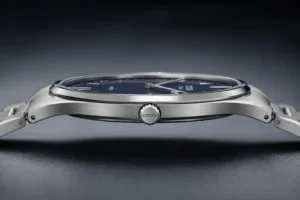
Citizen’s Caliber 0100, first unveiled in 2018 for the brand’s 100th anniversary and released commercially in 2019, held the record for the world’s most accurate light-powered watch: ±1 second per year. That’s achieved through a specially selected AT-cut quartz crystal, thermo-compensation, and a manufacturing process that ages the crystals before final calibration to lock in long-term stability.
The original Caliber 0100 watches were genuinely limited — around 100 pieces in 18k white gold and a few hundred more in Super Titanium, priced between roughly $7,400 and $16,800 at launch. It’s powered entirely by Citizen’s Eco-Drive light-charging system, meaning it never needs a battery. Full specifications and current models are listed on the official Citizen Watch global site.
Other Japanese Luxury Watch Names Worth Knowing
Casio operates well beyond G-Shock — its Oceanus and premium MR-G lines combine solar charging with GPS or radio-controlled timekeeping in titanium cases, aimed at buyers who want atomic-level accuracy without a mechanical movement.
Minase is a smaller, independent Japanese luxury watch brand known for multi-part case construction and Sallaz mirror polishing — a hand-finishing technique similar in spirit to Grand Seiko’s Zaratsu work, applied by a much smaller workshop with a more experimental design language.
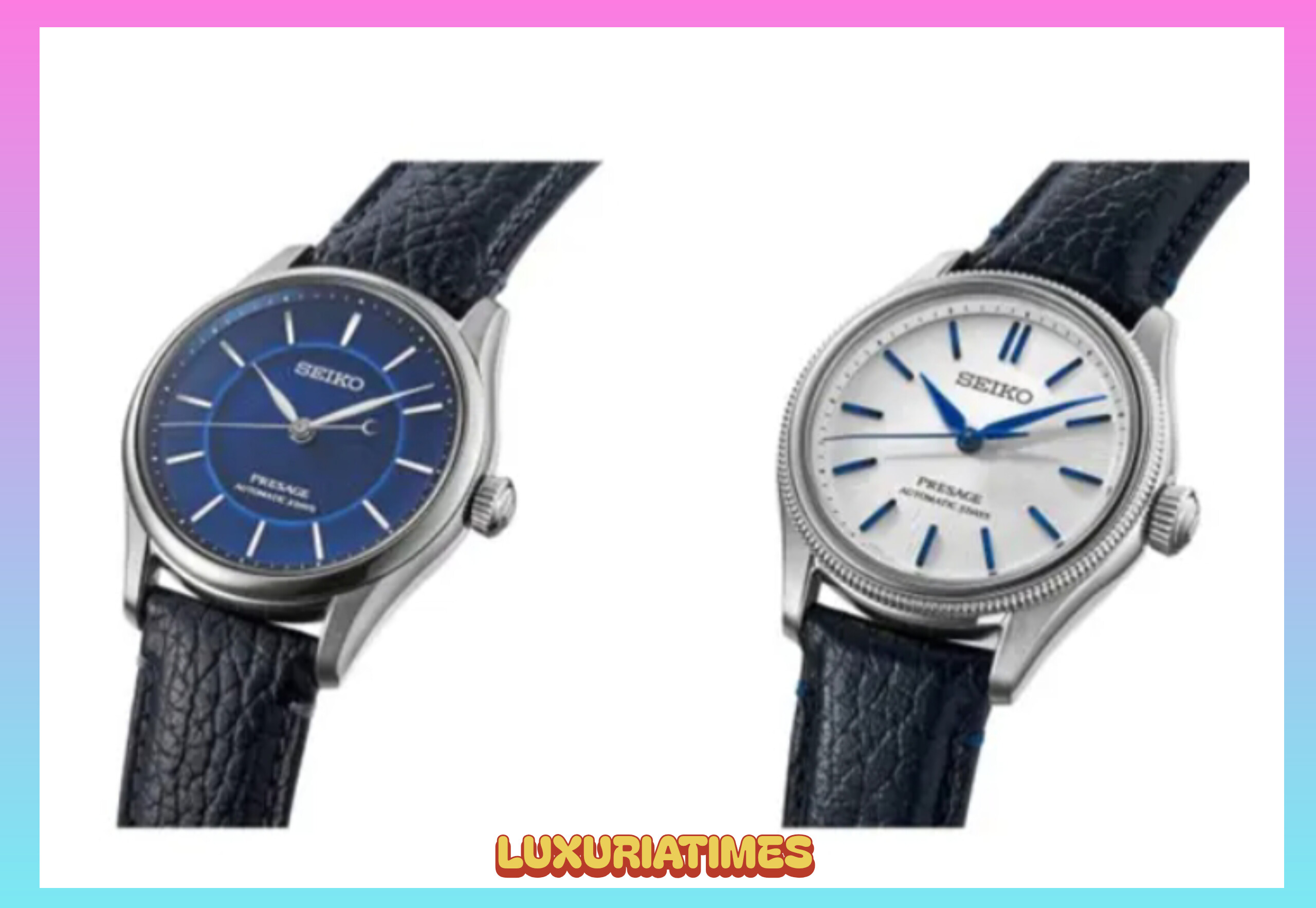
Orient Star, Seiko’s more accessible sibling brand Seiko Presage, and boutique independents round out a scene that’s far deeper than most Western buyers realize. For general background on the wider category, Wikipedia’s entry on Spring Drive is a solid, neutral starting point.
Curious how Japanese and Swiss options stack up for a first serious watch? See best automatic watches for beginners.
What Makes Japanese Luxury Watches Different
Three things set Japanese luxury watches apart from their Swiss counterparts, and none of them are marketing spin:
1. Precision is treated as the primary goal
Swiss haute horlogerie often prizes complexity and heritage above raw accuracy. Japanese luxury watchmakers, especially Citizen and Seiko’s Spring Drive teams, have historically treated timekeeping precision itself as the thing worth chasing — which is why so many accuracy records belong to Japanese calibers.
2. Finishing is judged by light, not just by loupe
Zaratsu and Sallaz polishing are built around how a surface behaves under changing light, producing a mirror finish with zero waviness. It’s a different finishing philosophy than Swiss anglage, but arguably just as demanding to execute by hand.
3. Small-batch exclusivity without the marketing noise
Credor’s Micro Artist Studio produces a tiny number of watches a year almost quietly, with none of the hype campaigns that accompany equivalent Swiss limited editions. For collectors, that under-the-radar rarity is part of the appeal.
Japan vs Switzerland: Where Each One Wins
| Factor | Japanese Luxury Watches | Swiss Luxury Watches |
|---|---|---|
| Signature strength | Precision engineering, Spring Drive, high-accuracy quartz | Mechanical heritage, complications, brand prestige |
| Finishing style | Zaratsu / Sallaz mirror polishing | Anglage, Côtes de Genève, perlage |
| Global recognition | Growing, still underrated outside collector circles | Immediate, near-universal |
| Secondary market | Thinner, less liquid outside Japan | Deep, highly liquid (especially Rolex, Patek) |
Neither side “wins” outright — Swiss brands still dominate resale liquidity and brand recognition, while Japanese luxury watches frequently out-engineer them on raw accuracy and offer more visible hand-finishing for the price. For context on how Swiss resale actually performs, see is Rolex a good investment in 2026.
Investment Perspective
Be realistic here: outside of a handful of rare Grand Seiko and Credor references, most Japanese luxury watches don’t carry the resale liquidity of Rolex or Patek Philippe. Limited Grand Seiko editions and Credor’s Micro Artist Studio pieces have shown solid value retention among dedicated collectors, largely because production numbers are so low. But the broader Japanese luxury watch segment is still building the kind of global secondary market that Swiss brands have had for a century — buy these watches because you want to wear them, not purely as a speculative asset.
Buying Guide for Japanese Luxury Watches
1. Decide what you actually value
If raw accuracy matters most, Citizen’s high-accuracy quartz lines are hard to beat. If you want mechanical craftsmanship with quartz-level precision, Spring Drive from Grand Seiko or Credor is the standout.
2. See the finishing in person
Zaratsu and Sallaz polishing genuinely need to be seen under changing light — photos rarely do it justice, and it’s the main reason people become repeat Grand Seiko buyers.
3. Buy from authorized sources
For Grand Seiko and Credor, stick to authorized boutiques or established dealers. For rarer pieces like the Eichi II, expect long waitlists rather than walk-in availability.
Also worth a look: best luxury watches for small wrists, since several Japanese references run smaller and more wearable than their Swiss counterparts.
FAQs: Japanese Luxury Watches
Are Japanese luxury watches actually comparable to Swiss brands?
In finishing and accuracy, yes — Grand Seiko’s Zaratsu polishing and Spring Drive movements are genuinely on par with high-end Swiss work. In brand prestige and resale liquidity, Swiss brands like Rolex and Patek Philippe still lead by a wide margin.
What is Spring Drive?
Spring Drive is a Seiko-developed movement that uses a traditional mainspring for power but replaces the mechanical escapement with an electronic Tri-synchro Regulator, resulting in accuracy around ±1 second per day and a perfectly smooth sweeping seconds hand.
How accurate is the Citizen Caliber 0100?
±1 second per year — among the most accurate autonomous watches ever produced, achieved through a specially selected AT-cut quartz crystal and thermo-compensation.
Is the Credor Eichi II a good investment?
It holds value well among serious collectors due to extremely limited production (about 20 pieces a year), but it isn’t a liquid, easy-to-resell asset the way a steel Rolex sports model is. Buy it for the craftsmanship first.
Do Japanese luxury watches hold their value?
Select limited-production Grand Seiko and Credor pieces do reasonably well. Mass-produced Japanese watches generally depreciate like most consumer goods, similar to non-flagship Swiss pieces.
Which brand should a beginner start with?
Grand Seiko’s entry-level mechanical and Spring Drive models offer the clearest introduction to Japanese luxury watch finishing quality without the extreme rarity or price of Credor’s top pieces.
Final Thoughts
Japanese luxury watches earned their reputation the hard way — through engineering, not marketing. Grand Seiko’s finishing, Credor’s rarity, and Citizen’s obsession with pure accuracy each represent a different way of chasing the same goal: a better watch, not just a more famous one. Swiss brands still win on heritage and resale, but if you care about what’s actually happening inside the case, Japanese luxury watches deserve a serious look in 2026.
Keep exploring: Rolex Watches · Watch Movement Guide · Luxuria Times Blog