
10 Rare Luxury Watch Features Collectors Pay Millions For
From ghost bezels to meteorite dials, these rare luxury watch features separate ordinary timepieces from true collector’s grails — and they explain why certain watches quietly command fortunes at auction.
Interest in luxury watches has grown steadily across Pakistan over the last few years, with buyers in Karachi and Lahore increasingly asking not just “which brand” but “which detail” makes a piece genuinely rare. If you’re comparing options — including checking the Audemars Piguet price in Pakistan — understanding these rare luxury watch features will help you tell an ordinary piece from a genuine collector’s item.
1. Salmon Dials: A Warm, Coveted Rarity

Salmon dials — a warm, pink-orange tone achieved through layered lacquer and metallic finishing — are one of the most quietly coveted rare luxury watch features in horology. They’re most associated with Patek Philippe, where the shade shifts subtly depending on the angle of light. If you want to see how far collector demand pushes prices on pieces like this, our breakdown of the most expensive Patek Philippe watches is a good next read.
Because the finishing process is difficult to control consistently, true salmon dials are produced in small numbers, and collectors treat them as a mark of both craftsmanship and exclusivity.
What separates a genuine salmon dial from an imitation is often the way the color shifts under different lighting — a real lacquer-finished dial will show subtle gradients from warm rose to soft copper depending on the angle, while cheaper reproductions tend to look flat and uniform. This is one reason experienced buyers ask to view a watch in natural daylight before making a purchase decision, rather than relying on studio photography alone.
2. Tropical Dials: Sun-Faded Vintage Character

Tropical dials are original black dials that have aged into warm brown or amber tones after decades of UV exposure. This isn’t a factory finish — it’s a natural, one-of-a-kind patina, which is exactly why collectors prize it. Rolex and Omega both produced sport watches in the mid-20th century that are now known for developing this effect, and pricing on these vintage pieces has moved significantly; you can track current figures in our average Rolex price guide for 2026.
Because no two tropical dials fade identically, each one is effectively unique — something no modern manufacturing process can replicate on demand.
Collectors generally look for even, symmetrical fading across the full dial surface, since patchy or one-sided discoloration can be a sign the watch was stored improperly or, in rarer cases, that the dial has been artificially aged to imitate a natural tropical effect. A consistent chocolate-brown or warm amber tone across the entire dial, paired with matching lume aging on the hands, is usually the strongest indicator of an honest, untouched example.
3. Ghost Bezels: Faded GMT & Submariner Character
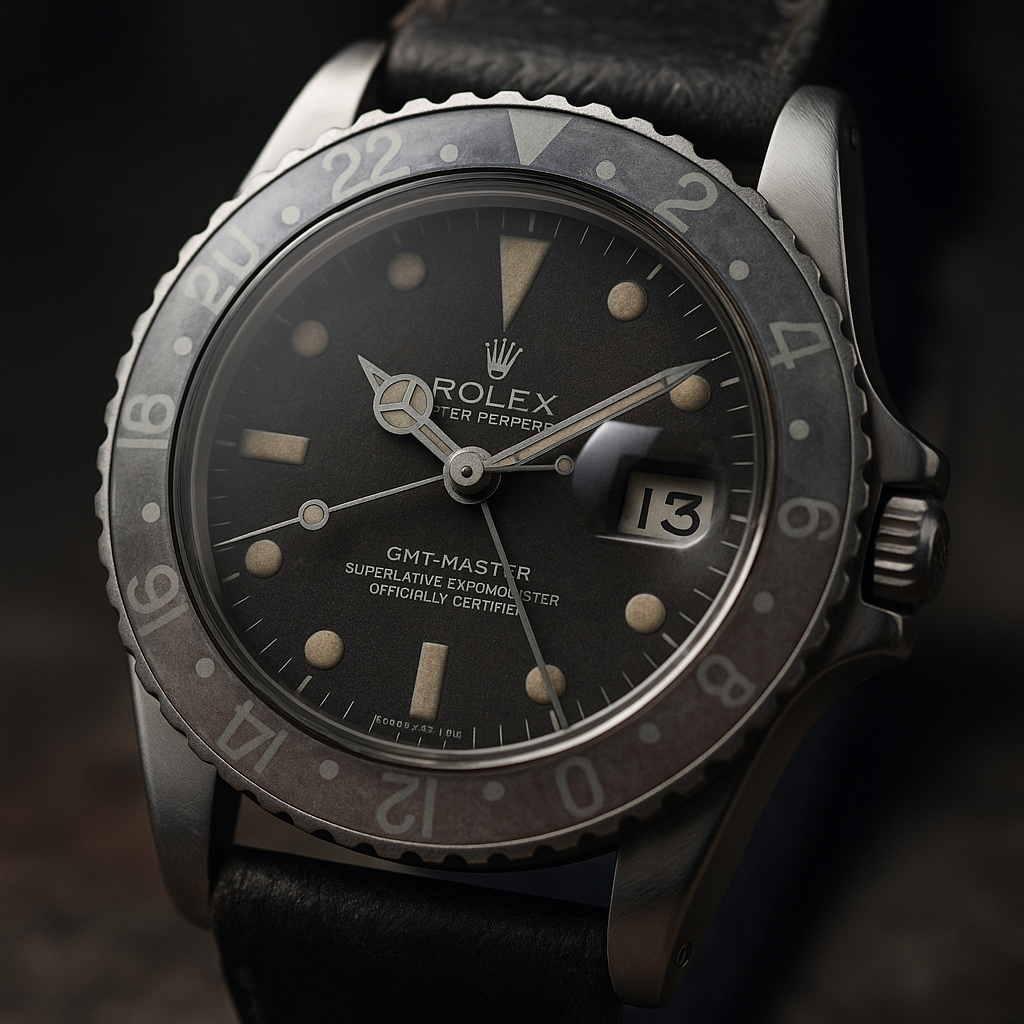
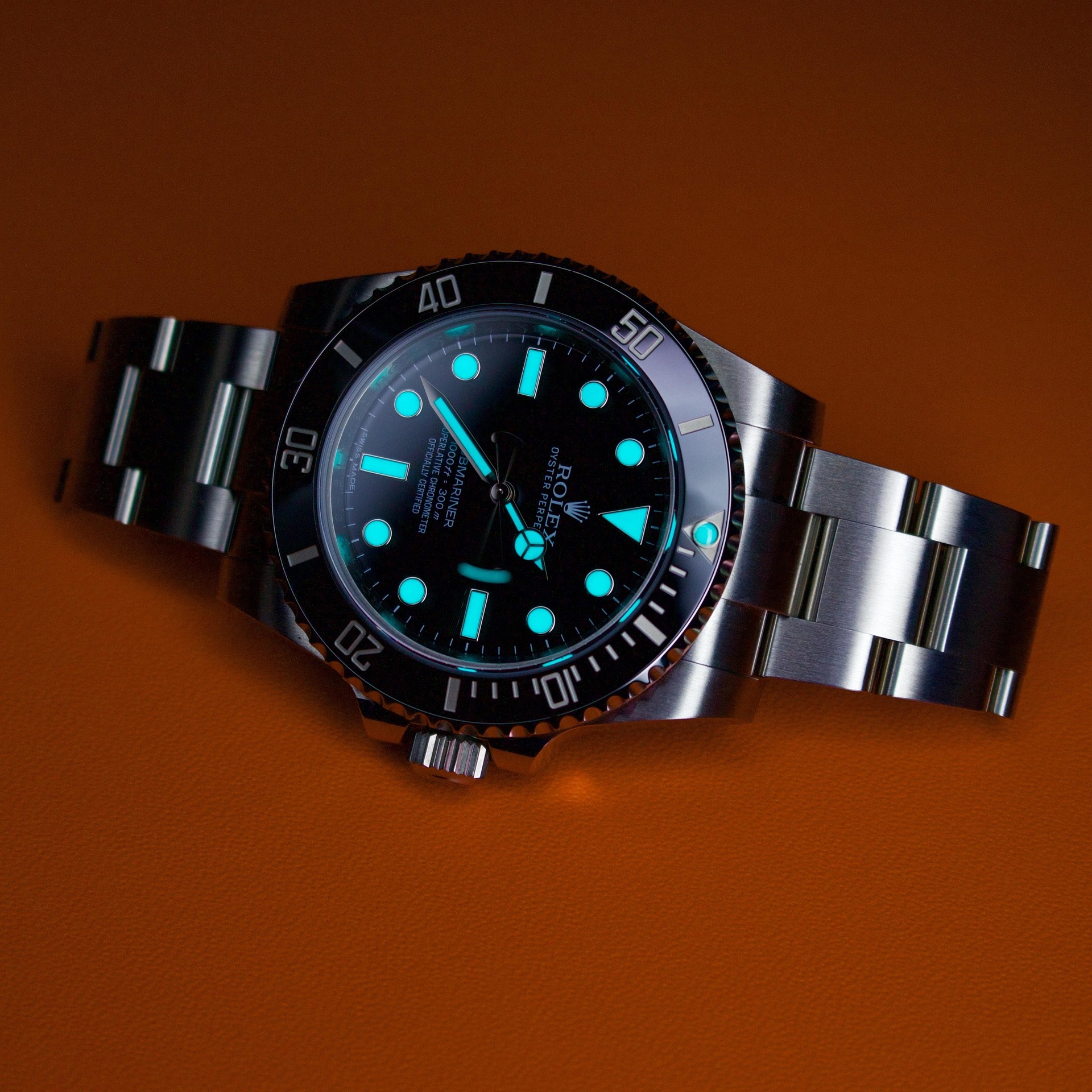
“Ghost bezels” describe the faded, misty bezel inserts seen on well-worn Rolex GMT-Master and Submariner models — years of sun and saltwater exposure gradually mute the original blues and blacks into softer greys and browns. If you’re shopping for a GMT specifically, our guide to luxury GMT watches in 2026 covers current models worth considering.
This natural wear tells a story that a factory-fresh watch simply can’t, and buyers should always confirm authenticity carefully before paying a premium for it.
The direction and evenness of the fade matters too — bezels that were regularly exposed to sunlight in a fixed position (worn on the same wrist for years) often fade more on one side, while divers exposed to consistent conditions show a more uniform ghosting effect. Either pattern can be genuine, but a bezel that looks perfectly even in a way that seems too deliberate is worth having checked by a specialist before you buy.
4. Double-Signed Dials: When Two Names Share the Face
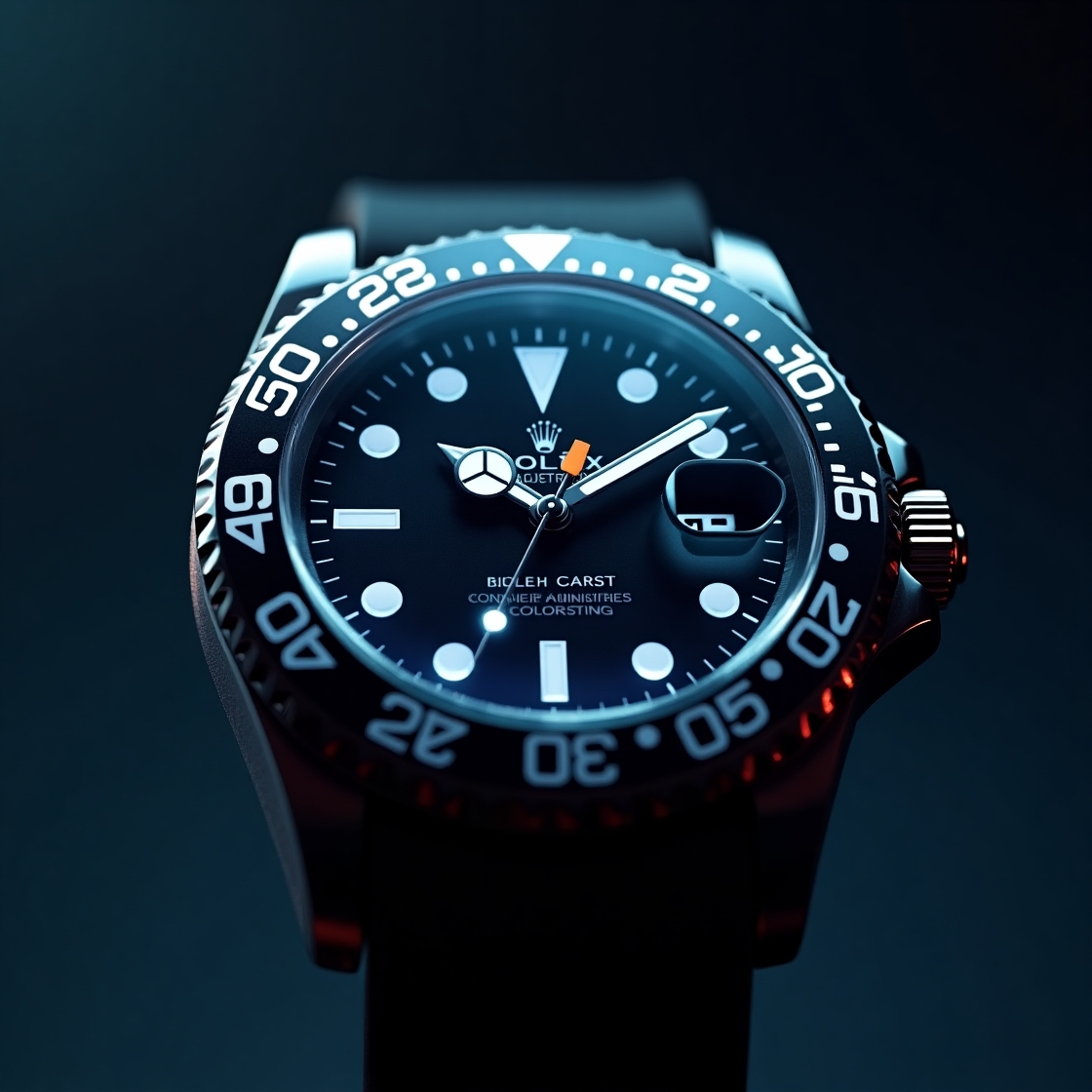
A double-signed dial carries both the watchmaker’s name and a prestigious retailer’s — think Tiffany & Co. paired with Rolex, or Cartier paired with Gübelin. These were made in very small runs, often just a handful per retailer, and they’re now treated as serious pieces within any luxury watch investment conversation.
Retailer signatures were typically applied at the point of sale rather than at the factory, which means the font, placement, and depth of the engraving can vary slightly even across genuine pieces from the same retailer. This makes side-by-side comparison with verified reference examples one of the more reliable ways to assess authenticity, alongside original boxes, papers, and service records where available.
5. Secret Signatures: Hidden Authentication Marks
Secret signatures are tiny engravings or initials placed discreetly on the dial, under the crystal, or between the indices — used by houses like Audemars Piguet, Patek Philippe, and Vacheron Constantin as an internal authentication marker rather than a decorative feature. On some Audemars Piguet Royal Oak references — including the Royal Oak 15202 — these marks sit near a specific hour marker and are only visible under magnification.
Because counterfeiters rarely replicate these details accurately, buyers verifying a watch’s authenticity should read our guide on how to spot a fake Rolex Submariner for the same principles applied to a different brand.
Some manufacturers change the placement or style of their secret signature across different production years, which means the mark itself can also help narrow down roughly when a piece was made — useful information when cross-checking a watch’s stated age against its serial number and other production details.
6. Meteorite Dials: A Dial Older Than Earth
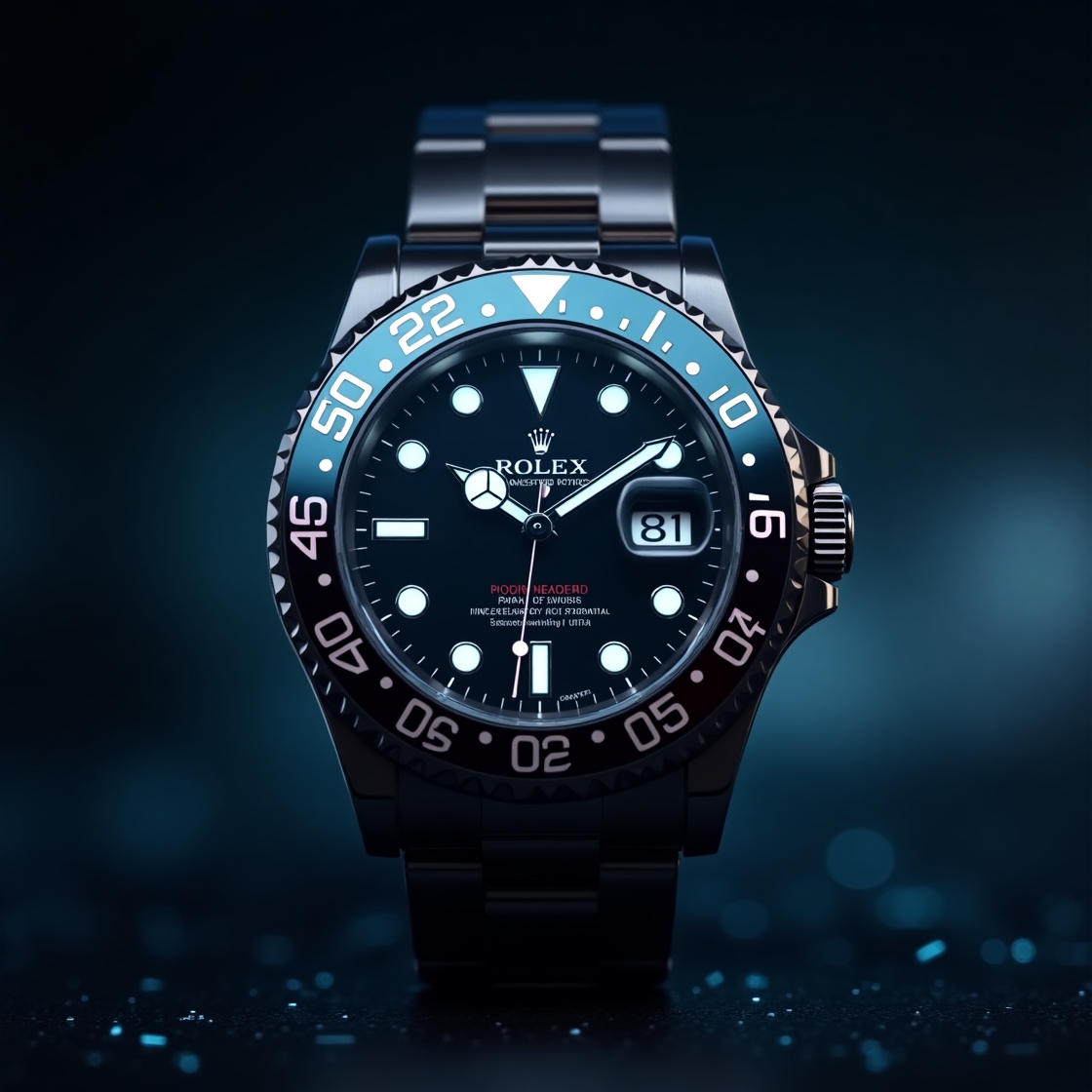
Meteorite dials are cut from actual meteorite fragments — most commonly the Gibeon meteorite recovered in Namibia — revealing natural Widmanstätten crystal patterns that form only through millions of years of slow cooling in space (background on the phenomenon here). Because each slice is different, no two meteorite dials are ever identical.
Rolex, Omega, and Jaeger-LeCoultre have all used the material in select references. For a closer look at which current models feature it, see our dedicated guide to luxury meteorite dial watches.
Working with meteorite is also technically demanding — the material is brittle compared to conventional dial metals, and cutting it thin enough for a wristwatch without cracking the crystal structure requires specialized equipment. This is part of why meteorite dials remain limited to select references rather than becoming a standard option across a brand’s full catalog.
7. Stone Dials: Nature’s Luxury on the Wrist
Lapis lazuli, malachite, and jasper dials turn a watch face into a small piece of wearable geology. Piaget has worked with stone dials since the 1960s, and because each slab of stone has unique veining and color variation, no two dials — even from the same production batch — are ever identical.
Sourced from mines across Afghanistan, Chile, and parts of Africa, these dials can’t be synthetically reproduced without losing the natural texture collectors specifically pay for.
Stone dials also demand extra care from owners — natural minerals like lapis and malachite are more porous and brittle than lacquered brass or enamel, so they’re more sensitive to impact and humidity. Watches with stone dials are generally better suited to careful, occasional wear rather than daily use, which is part of why well-preserved vintage examples are increasingly hard to source.
8. Jumping Hour: A Mechanical Watch That Feels Digital
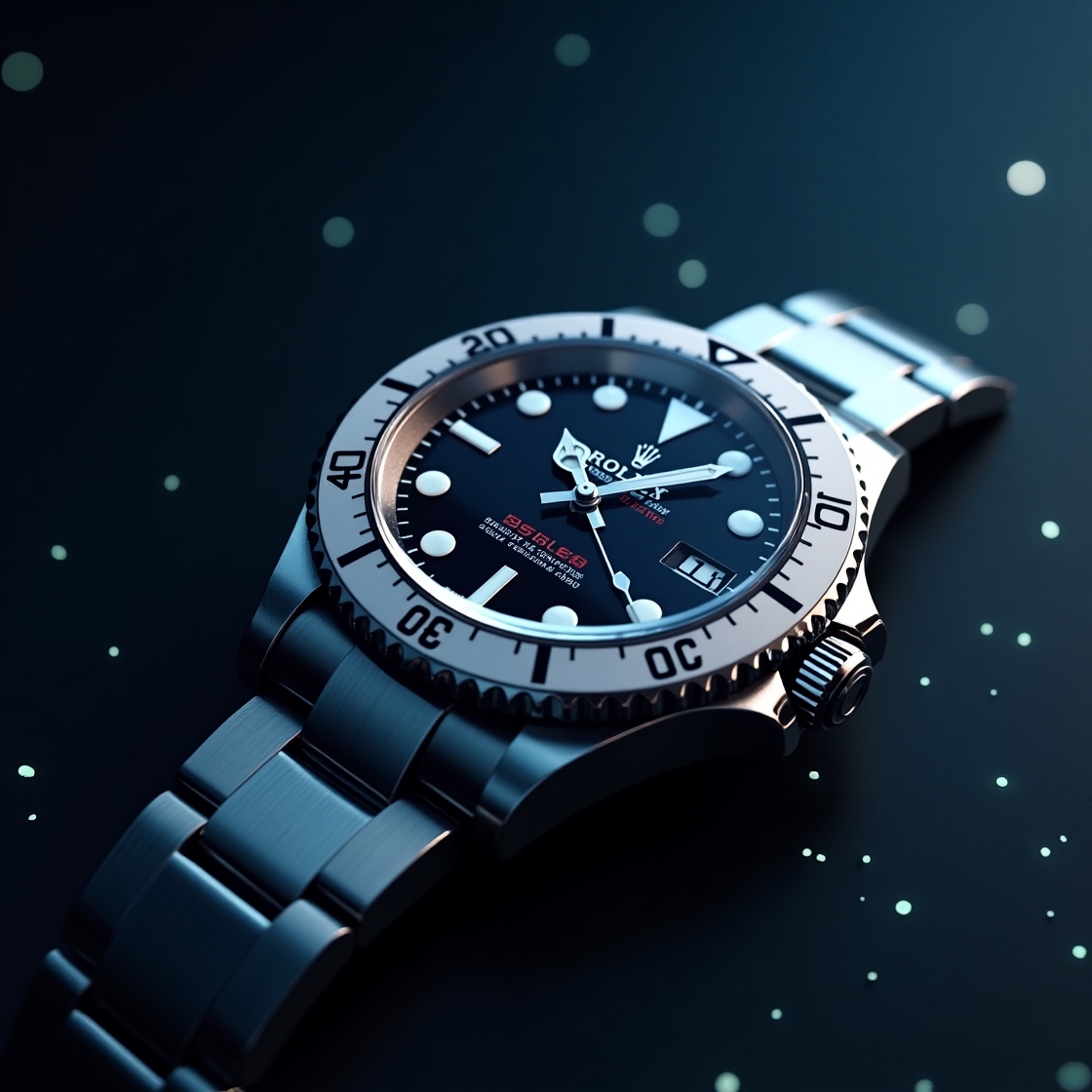
First popularized in the 1920s, the jumping hour complication swaps the traditional hour hand for a rotating numbered disc that “jumps” cleanly on the hour. Cartier’s Tank à Guichets and several A. Lange & Söhne pieces remain the best-known modern examples, and because the mechanism is genuinely difficult to execute well, it stays rare even in reissued form.
If you’re building a first serious collection and want a complication with real horological depth without an unlimited budget, our best first luxury watch under $10,000 guide is worth reading alongside this one.
Unlike a standard hand-based movement, a jumping hour mechanism needs to store and release energy instantly at the top of each hour rather than moving continuously, which puts extra strain on the movement’s components. Watchmakers who get this right — with a clean, precise jump and no lag — are demonstrating a level of finishing that’s genuinely harder to achieve than it looks from the outside.
9. Blued Steel Hands: Color From Heat, Not Paint
Blued steel hands aren’t painted — they’re heat-treated at around 300°C until the steel oxidizes into a deep sapphire-blue tone. It’s a technique long associated with Patek Philippe and A. Lange & Söhne, and it’s unforgiving: a few seconds too long in the flame ruins the entire batch of hands.
You don’t need this level of finishing to start collecting, though — our roundup of best watches under $1,000 is a practical starting point if you’re newer to the hobby.
One easy way to tell true blued steel from painted or coated imitations is to look at the hands from multiple angles in direct light — genuine flame-blued steel shifts subtly between deep blue and near-black depending on the viewing angle, while painted finishes tend to hold a single flat shade regardless of how the light hits them.
10. Sector Dials: 1930s Precision, Still Collected Today
Sector dials get their name from the pie-slice (“sector”) divisions radiating from the dial’s center, a design that originated in early 20th-century scientific instruments before watchmakers like Universal Genève and Movado adopted it for wristwatches in the 1930s. The style’s clean, symmetrical layout has made it a favorite of the current vintage-revival trend, and original pieces in good condition are increasingly hard to find.
Because production volumes were modest even at the time, genuine vintage sector dial watches are rarer today than many better-known complications from the same era.
Part of the appeal is how legible the design still feels almost a century later — the radiating sector lines were originally meant to improve readability on aviation and scientific instruments, and that same clarity is a big reason contemporary independent watchmakers keep revisiting the layout in modern reissues.
Frequently Asked Questions
What makes ghost bezels valuable to collectors?
The fading is natural and impossible to fake convincingly at scale, which makes a genuine ghost bezel a reliable sign of decades of real wear on an original watch rather than a modified or reissued one.
How can I verify a secret signature on a luxury watch?
You typically need a jeweler’s loupe or macro photography, since these marks are deliberately small and placed in brand-specific locations. A reputable dealer or the brand’s own service center can usually confirm placement and authenticity.
Are meteorite dials always genuine?
Not always — lower-cost “meteorite-style” dials using printed or synthetic patterns do exist in the market. Buying from an authorized dealer and requesting documentation is the safest way to confirm a dial is cut from real meteorite material.
What is a double-signed dial and why does it cost more?
It’s a dial signed by both the watchmaker and the original retailer — a practice largely discontinued today, which is part of why surviving examples are scarce and command a premium over standard dials from the same reference.
Conclusion: Rarity Is in the Details
None of these ten rare luxury watch features are loud or obvious at first glance — that’s precisely the point. Whether it’s a naturally faded bezel, a hidden signature, or a dial cut from a rock older than the planet, real rarity in horology usually shows up in the details rather than the branding.
If you’re just starting out, our affordable luxury watches under $500 guide and our overview of the Audemars Piguet Royal Oak price range are both good next stops before you buy.