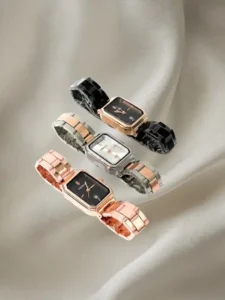

Claves (Clous de Paris) Watch Dials Explained: Why Collectors Love Them – and Why Some Don’t
Look closely at certain dress watches and sports icons alike and you’ll spot it: a field of tiny, perfectly aligned pyramids catching the light. That texture has a name — Clous de Paris, French for “Parisian nails,” sometimes anglicized as the hobnail pattern and occasionally misheard or misspelled online as “claves.” It’s one of watchmaking’s oldest decorative techniques, and it still splits collector opinion today. Here’s what it actually is, why it’s suddenly everywhere, and why not everyone is a fan.

What Is Clous de Paris?
Clous de Paris is a guilloché pattern — a family of decorative engraving techniques used on dials, bezels, and even movement bridges. Specifically, it’s a grid of small, raised, pyramid-shaped studs that catch and scatter light differently depending on the angle you view them from. That’s the whole trick: a flat metal surface turned into something that seems to shift and shimmer as your wrist moves.
The name translates literally to “Parisian nails,” a nod to how the raised points resemble a field of tiny nail heads or cobblestones. In English, it’s often just called the hobnail pattern. Whatever you call it, the effect on a dial is unmistakable — sharper and more dimensional than a printed or painted texture could ever look.
Where the Pattern Comes From
Guilloché itself dates back centuries, with roots in decorative engraving on objects well beyond watches — jewelry boxes, silverware, even the ornate eggs Fabergé became famous for. Watchmakers adopted the technique as engine-turning machines became precise enough to work on dial-sized surfaces, and by the 19th century it had become a signature of serious watchmaking.
Clous de Paris specifically became one of the most enduring patterns in that family, prized because the geometry is simple enough to read clearly at a glance but demanding enough to execute that it separates skilled ateliers from mass producers. It nearly disappeared as a hand craft in the late 20th century, when the artisans and machines capable of true engine-turning became rare. Today it survives mostly through in-house preservation at a handful of maisons.
How It’s Actually Made
There are three ways a Clous de Paris dial gets made, and the difference between them matters more than most buyers realize.
Hand guilloché
A trained artisan — there are reportedly fewer than 100 in Switzerland still capable of this — guides a dial blank across a rose engine or straight-line engine, one careful pass at a time. The machine oscillates while the craftsman controls pressure and rhythm by hand, cutting each tiny pyramid individually. It’s slow, expensive, and each dial ends up very slightly different from the next — which collectors treat as a feature, not a flaw.
CNC-cut guilloché
A computer-controlled cutter reproduces the same geometric pattern with high precision and consistency. It lacks the subtle human variation of hand-cut work, but a well-programmed CNC dial can still carry real depth and sharp, clean lines.
Stamped dials
A die presses the pattern into a thin metal blank in one motion. It’s fast and cheap, which is why stamped Clous de Paris shows up on far more affordable watches. The trade-off is depth — stamped pyramids tend to look flatter and softer, without the crisp facets that make the hand-cut version shimmer.
Why Collectors Love It
- It’s craftsmanship you can actually see. Unlike a finely finished movement hidden under a caseback, a guilloché dial puts the skill front and center every time you check the time.
- The light effect never gets old. A Clous de Paris dial genuinely looks different in sunlight, indoors, or under a loupe — most printed dials look identical every time.
- It signals heritage. Because true hand guilloché is a dying craft, a dial made this way connects a modern watch to centuries-old technique, which matters to collectors who value story as much as spec.
- It works across styles. The same pattern reads as classic on a dress watch and as sporty-industrial on something like an integrated-bracelet sports watch — a rare kind of versatility.
Why Some Collectors Avoid It
- Not all Clous de Paris is equal — and it’s hard to tell from photos. A $300 stamped dial and a $30,000 hand-guilloché dial can look nearly identical in a listing photo, which makes buyers understandably cautious.
- It can feel busy. On smaller dials or in combination with a lot of other text and sub-dials, the texture can compete for attention rather than complement the design.
- Legibility trade-offs. The same light-scattering effect that makes the pattern beautiful can occasionally make hands harder to read at certain angles or in low light.
- Premium pricing for a texture, not a mechanism. Some buyers feel dial decoration shouldn’t command the same premium as movement finishing, since it doesn’t affect how the watch actually performs.
None of these are dealbreakers for most collectors — but they explain why opinions on this pattern are more divided than you’d expect for something so widely used.
Brands Known for Clous de Paris
The pattern shows up across very different price points and styles. Audemars Piguet’s Royal Oak line is probably the most famous modern example, using an in-house version on its “Grande Tapisserie” dials. Girard-Perregaux uses it prominently on the Laureato. Breguet and Patek Philippe still produce genuine hand-guilloché Clous de Paris on select references, often paired with other traditional dial-finishing techniques on the same face. Independent and boutique makers like Eberhard & Co. have also built entire recent collections around the motif, leaning into its architectural, light-catching quality.
If mechanical craftsmanship and material choice matter to you, you might also enjoy our guides on best automatic watches for beginners and Japanese luxury watches, where finishing quality plays a similar role in value.
How to Spot Real Quality
| Method | Depth & Sharpness | Uniqueness | Typical Price Tier |
|---|---|---|---|
| Hand guilloché | Deep, crisp, faceted | Each dial slightly unique | Ultra-high-end |
| CNC-cut | Sharp, very consistent | Identical across units | Mid to high-end |
| Stamped | Flatter, softer edges | Identical, mass-produced | Entry to mid-range |
In person, tilt the dial under a light source. Hand-cut and CNC dials will show sharp, distinct facets on each pyramid. Stamped dials tend to look duller and rounder up close, even if they photograph well. If a listing doesn’t specify the production method, it’s worth asking directly — reputable dealers will know the answer.
Buying Guide: What to Check Before You Buy
1. Confirm the production method
Ask whether the dial is hand-guilloché, CNC-cut, or stamped. This single detail affects both the look and the resale value more than almost any other spec on the watch.
2. Compare in natural light
Photos rarely capture how a guilloché dial behaves under changing light. See it in person, or ask a seller for video, before committing to anything above entry-level pricing.
3. Check dial condition closely
Because the pattern is textured, dust, polish residue, or old refinishing work can hide in the grooves. Inspect under magnification if buying pre-owned.
4. Weigh pattern against practicality
If you wear a watch in low light often, consider how the texture interacts with legibility — a busier pattern under applied hands can slow down a quick glance at the time.
For more on how finishing and material choices affect long-term value, see best luxury watches under $1,000 and is Rolex a good investment in 2026.
FAQs: Clous de Paris Watch Dials
Is “claves” the correct name for this pattern?
No — the correct term is Clous de Paris, sometimes anglicized as the hobnail pattern. “Claves” appears to be a common misspelling or mishearing that’s spread online, but it isn’t the accepted watchmaking term.
What does Clous de Paris mean?
It translates from French as “Parisian nails,” referring to the small raised pyramid shapes that resemble a field of nail heads or cobblestones.
Is Clous de Paris always hand-made?
No. It can be hand-cut on a rose or straight-line engine, machined by CNC, or stamped. Only the first method counts as true hand guilloché, and it’s increasingly rare.
Which watches are famous for this dial pattern?
The Audemars Piguet Royal Oak and Girard-Perregaux Laureato are two of the most recognizable modern examples. Breguet and Patek Philippe still produce genuine hand-guilloché versions on select references.
Does a Clous de Paris dial affect a watch’s value?
Yes, particularly if it’s hand-cut. A documented hand-guilloché dial is a meaningful factor collectors weigh when comparing otherwise similar watches, and it can noticeably affect resale.
How can I tell if a dial is stamped or engine-turned?
Look closely under a light source. Hand-cut and CNC dials show sharp, distinct facets; stamped dials look flatter and softer, even if the overall pattern looks similar from a distance.
Why do some collectors avoid this pattern?
Common reasons include difficulty verifying quality from photos alone, the texture feeling busy on smaller dials, mild legibility trade-offs, and skepticism about paying a premium for dial decoration rather than movement quality.
Final Thoughts
Clous de Paris earns its long history for a simple reason: it turns a flat, functional surface into something that genuinely rewards a closer look. Whether that’s worth paying for comes down to what you value — the pattern itself, or the hands and machine that cut it. A stamped dial can look convincing in a photo, but a hand-guilloché one holds up under a loupe in a way mass production never will.
If you’re shopping with this pattern in mind, the production method matters more than the pattern name. Ask before you buy, look at it in changing light, and decide whether the story behind the dial is worth the premium to you.
Keep exploring: Best Solar-Powered Luxury Watches (2026) · Watch Movement Guide · Best Automatic Watches for Beginners