

The Ultimate Guide to Luxury Watch Complications 2026
Are complicated watches really more accurate — or just more expensive? In this 2026 expert guide, we break down tourbillons, perpetual calendars, minute repeaters and the real investment value behind luxury watch complications.
Discover the ultimate guide to luxury watch complications in 2026, including tourbillon, perpetual calendar, chronograph, and more—explained simply for collectors and buyers.
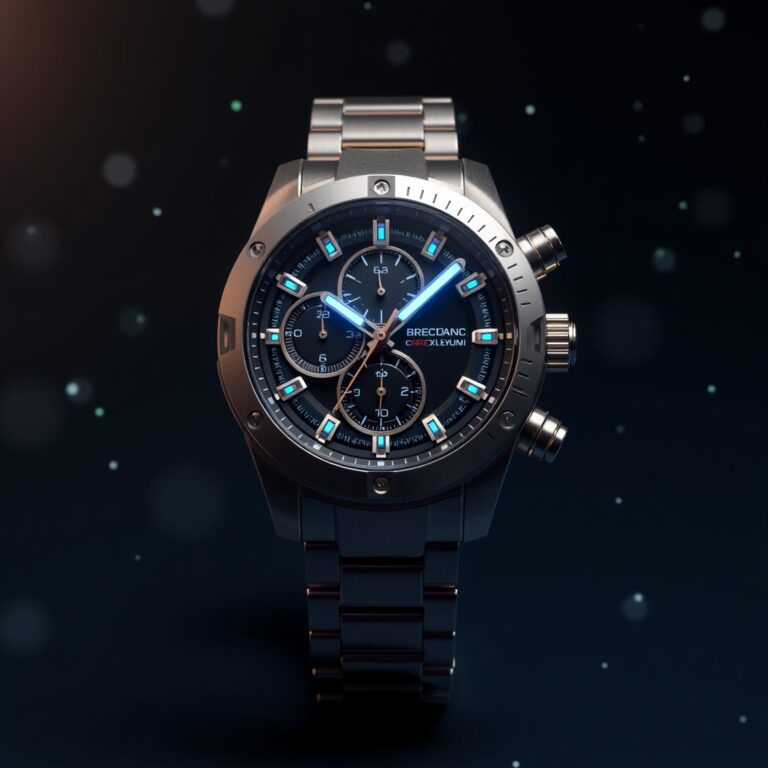
Quick Answer
Luxury watch complications are additional mechanical functions beyond timekeeping, such as chronographs, perpetual calendars, tourbillons, and minute repeaters. They increase complexity and craftsmanship but do not automatically improve accuracy.
Luxury Watch Complications 2026 – Complete Market & Investment Guide
Luxury Watch Complications 2026 are driving the evolution of high-end horology. From perpetual calendars to tourbillons and minute repeaters, complicated watches now represent both mechanical mastery and financial assets in today’s luxury market.
Major global showcases like Watches & Wonders Geneva confirm that high complications are the core innovation focus for leading Swiss brands in 2026.
According to our detailed market analysis on Luxury Watch Prices in 2026, limited-production complicated watches are outperforming entry-level timepieces in long-term appreciation.
Understanding Watch Complications
A watch complication refers to any function beyond basic timekeeping. These include:
- Chronograph (stopwatch)
- Perpetual Calendar
- Annual Calendar
- Tourbillon
- GMT & World Time
- Minute Repeater
If you're new to horology, first read our foundational guide on how watch movements work, as complications are built directly onto advanced mechanical calibers.
Accuracy of complicated watches often relates to movement certification standards such as COSC Chronometer Certification, rather than simply the number of complications.
Investment Perspective in 2026
After the Rolex Price Increase 2026, high-complication Rolex models have seen increased collector demand.
Before investing, review:
Swiss production data published by the Federation of the Swiss Watch Industry (FH) shows that high-complication pieces remain limited in output, increasing scarcity value.
Are Complicated Watches More Accurate?
No — complicated watches are not automatically more accurate. Precision depends on:
- Movement quality
- Regulation
- Chronometer certification
- Service intervals
In fact, adding complications increases mechanical complexity, which requires expert engineering to maintain precision.
Final 2026 Outlook
The future of Luxury Watch Complications 2026 lies in ultra-thin engineering, high-frequency movements, and limited-edition grand complications.
For continuous updates, explore our full 2026 luxury coverage and stay informed with LuxuriaTimes — your authority source for pricing, investment insights, and advanced horology.
More About Watch Complications
Your comprehensive guide to understanding the intricate world of luxury watch complications
Explore the most frequently asked questions about watch complications, from basic functions to the most sophisticated horological marvels. This guide is designed for both novice enthusiasts and seasoned collectors seeking deep, actionable knowledge.
🎯 Primary SEO Keywords for This Content:
- Luxury Watch Complications
- Perpetual Calendar Watch
- Chronograph Mechanism
- Tourbillon Watch
- Moon Phase Complication
- GMT Complication
- Minute Repeater
- Grand Sonnerie
- Horology Guide
A watch complication refers to any additional feature on a timepiece beyond the basic display of hours, minutes, and seconds. The term "complication" comes from the French word "complication," meaning complexity. These features can range from simple date displays to highly intricate mechanisms like perpetual calendars, tourbillons, and minute repeaters. Each complication adds layers of mechanical engineering, craftsmanship, and often increases the value of the timepiece. Watchmakers spend years mastering the art of creating reliable complications, and the most complex watches can contain hundreds of tiny components working in perfect harmony.
A perpetual calendar is considered one of the "holy trinity" of watch complications (alongside the tourbillon and minute repeater). This ingenious mechanism automatically accounts for the different lengths of months, including February, and even adjusts for leap years. Unlike standard calendar watches that require manual correction five times a year, a perpetual calendar will display the correct date, day, month, and often moon phase without any adjustment until the year 2100. This is because the Gregorian calendar omits leap years in century years not divisible by 400. The complexity lies in the "programming" – a series of gears and levers that remember the 48-month leap year cycle. Owning a perpetual calendar is like having a piece of astronomical timekeeping on your wrist.
A chronograph functions as an integrated stopwatch within a standard watch. When you press the start pusher (typically at 2 o'clock), a vertical or horizontal clutch engages the chronograph mechanism with the gear train, allowing the central seconds hand to begin moving. Pressing the same pusher again stops the timing, and the reset pusher (at 4 o'clock) returns all chronograph hands to zero. Advanced chronographs include "flyback" functionality, which allows resetting and restarting with a single press – essential for aviation and racing. Another sophisticated variant is the "rattrapante" or split-seconds chronograph, which uses two superimposed seconds hands to measure lap times or multiple events simultaneously. The column-wheel chronograph is considered the most prestigious, offering smoother operation and greater durability than cam-operated versions.
Invented by the legendary Abraham-Louis Breguet in 1795, the tourbillon (French for "whirlwind") was designed to solve a specific problem: gravity's effect on pocket watch accuracy. When a pocket watch remained in a vertical position for long periods, gravity would cause the balance wheel to run faster or slower depending on orientation. Breguet's solution was to mount the entire escapement (balance wheel, hairspring, and pallet fork) inside a rotating cage, typically making one revolution per minute. This rotation averages out positional errors, theoretically improving accuracy. In modern wristwatches that move constantly, the practical benefit is debated, but the tourbillon remains the ultimate symbol of watchmaking artistry. Creating a tourbillon requires exceptional skill – the cage often weighs less than a gram and contains over 50 tiny components. Double and triple-axis tourbillons add even more complexity and visual drama.
A moon phase complication is one of the oldest and most poetic horological features. It displays the current phase of the moon – new, crescent, quarter, gibbous, or full – as seen from Earth. The mechanism typically uses a disc with two identical moons printed or embossed on it, rotating behind an aperture shaped like a window or semi-circle. The disc completes one full rotation every 29.5 days (specifically 29 days, 12 hours, 44 minutes, and 2.8 seconds), which is the length of a lunar cycle. High-end moon phase watches use a more accurate 122-year or even 577-year gear train to minimize the one-day error that occurs every two and a half years in standard versions. Some "northern" and "southern" hemisphere moon phase indicators exist for collectors who travel frequently. The moon phase is often combined with other calendar complications, adding astronomical beauty to the watch dial.
Both are acoustic complications that chime the time, but their complexity and operation differ significantly. A minute repeater chimes the time on demand when the user slides a lever or button. It typically produces three sets of sounds: low-pitched tones for hours, double-tones (high-low) for quarter hours, and high-pitched tones for minutes. For example, 2:47 would chime two low tones, three double-tones (45 minutes), then two high tones. A grand sonnerie (French for "grand strike") is far more complex. It automatically chimes the hours and quarter hours as time passes, similar to a classic grandfather clock. It can also be switched to "petite sonnerie" mode (chiming only the hours) or "silence" mode. Creating a grand sonnerie requires hundreds of additional components, making it one of the rarest and most expensive complications – often costing several hundred thousand dollars or more. The sound quality, resonance, and clarity of the gongs are critical factors that distinguish exceptional pieces.
A GMT complication (Greenwich Mean Time) allows a watch to display two time zones simultaneously. The classic design features an additional hour hand that completes one revolution every 24 hours, paired with a 24-hour scale on the bezel or dial. The main hour hand shows local time, while the GMT hand points to home time on the 24-hour scale. Modern "true GMT" movements (often called "traveler's GMT") allow the local hour hand to be adjusted independently in one-hour increments without stopping the watch or affecting the GMT hand – perfect for frequent travelers. "Office GMT" or "caller GMT" movements adjust the GMT hand independently, which is less convenient but more affordable. Some advanced GMT watches include a third time zone via a rotating bezel. Originally developed in the 1950s for Pan Am pilots, the GMT complication has become essential for international businesspeople, pilots, and anyone with family or colleagues across time zones.
This is a common misconception. While some complications like the tourbillon were invented to improve accuracy, most complications do not enhance timekeeping precision and can sometimes reduce it. Here's why: each additional complication adds gears, springs, and levers that draw power from the mainspring. A chronograph, when engaged, requires significant energy that can slightly affect amplitude and rate stability. Perpetual calendars have large rotating discs that create additional friction. Minute repeaters have heavy hammers and gongs that can affect the movement when activated. However, modern manufacturing, synthetic lubricants, and high-frequency movements (28,800 vph or higher) have minimized these effects. The primary value of complications is not accuracy but horological artistry, mechanical fascination, and practical utility. For pure accuracy, a simple three-hand watch with a high-beat movement, free-sprung balance, and modern escapement will often outperform a highly complicated piece.
An annual calendar is a less complex but still highly practical complication introduced by Patek Philippe in 1996. It automatically accounts for months with 30 and 31 days but requires manual adjustment once per year – on March 1st, because it cannot distinguish February's 28 or 29 days. This makes it much easier to manufacture and more affordable than a perpetual calendar while still offering significant convenience. Most annual calendars require just one correction per year compared to five corrections for a standard date watch. The mechanism uses a clever 48-tooth wheel with differently spaced teeth to "teach" the movement the alternating month lengths. Annual calendars are popular among collectors who want calendar functionality without the high cost and complexity of a perpetual calendar.
A power reserve indicator is a useful complication that shows how much energy remains in the mainspring before the watch stops. It's particularly valuable for manual-wind watches and automatics with long power reserves (70 hours or more). The indicator typically appears as a hand pointing to a scale marked in hours (e.g., 0 to 70) or as a graduated arc. Some high-end watches use a "deadbeat" or "jumping" reserve indicator that moves in discrete steps. Knowing the power reserve helps owners avoid letting the watch run down completely, which can affect long-term accuracy. It also lets you know if daily wrist movement is sufficient to keep the watch fully wound. This complication is often found on pilot watches and tool watches where reliability is paramount.
A world time (or "worldtimer") complication displays the time in up to 24 or 37 time zones simultaneously, usually via a rotating disc or bezel with city names. The most famous version was invented by Louis Cottier in the 1930s and popularized by Patek Philippe (Ref. 2523). On a world time watch, the 24-hour ring rotates, while the city ring remains fixed (or vice versa). The user simply sets their home city to 12 o'clock, and the time in every other time zone is instantly readable. Unlike a GMT watch (which shows two zones), a world timer shows all zones at a glance – ideal for global travelers, diplomats, and businesspeople who frequently communicate across continents. Modern world timers often include daylight saving time adjustments for cities that observe it, though this adds mechanical complexity.
📖 From the Editor's Desk
Understanding watch complications transforms a simple timepiece into a conversation piece and a lifelong passion. Whether you're drawn to the visual ballet of a tourbillon, the practical utility of a GMT, or the acoustic poetry of a minute repeater, each complication represents hundreds of hours of human skill and ingenuity. Start with simpler complications like date or power reserve, then gradually explore the "holy trinity" – tourbillon, perpetual calendar, and minute repeater. The journey of horological discovery is as rewarding as the destination.