
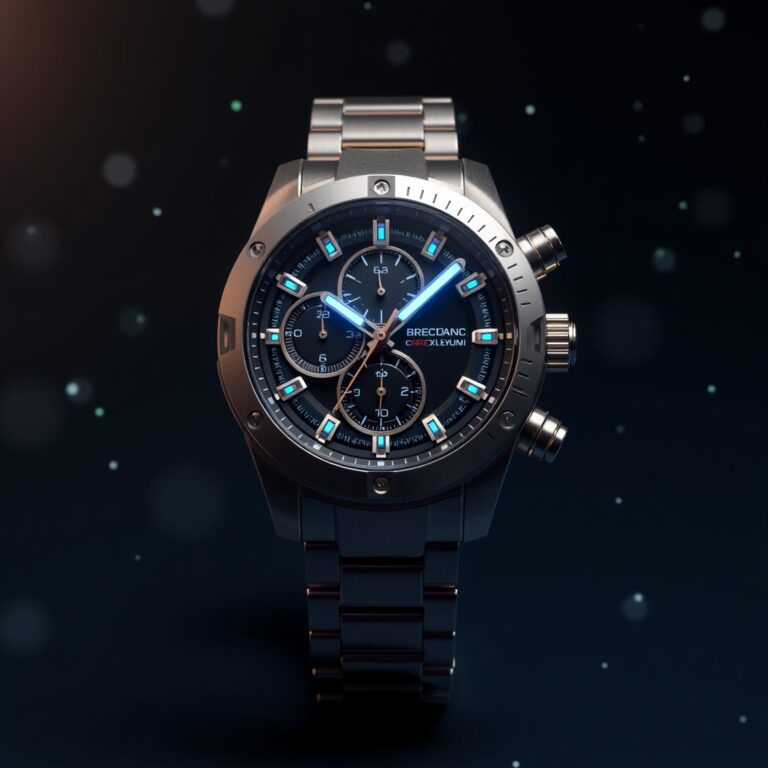
The Chronographs
1Simple Chronograph
The chronograph is among the most popular and practical complications, functioning as a stopwatch that can measure elapsed time. A basic chronograph typically includes central seconds hand for timing, along with subdials for recording minutes and hours.
Operated through pushers on the case side, the chronograph starts, stops, and resets the timing function without interfering with the watch's primary timekeeping. The mechanism involves a complex series of levers, springs, and wheels that engage and disengage with the movement's gear train.
Chronographs have historically been used in aviation, auto racing, and diving, making them both functional tools and stylish accessories. Luxury chronographs often feature finely decorated column wheels visible through exhibition casebacks.
2Flyback Chronograph
The flyback chronograph is a specialized type of stopwatch that allows instantaneous resetting and restarting with a single push of a button. This function was originally developed for pilots who needed to make quick consecutive timing measurements without performing multiple operations.
Unlike a standard chronograph that requires three actions (stop, reset, start) to begin a new timing, the flyback accomplishes this with one press of the reset button. The mechanism immediately returns the chronograph hand to zero and begins a new timing sequence.
This complication requires additional engineering complexity but offers unparalleled functionality for timing consecutive events. The flyback remains a prized complication among watch enthusiasts and professionals.
3Rattrapante Chronograph
Also known as a split-seconds chronograph, the rattrapante is among the most sophisticated timing complications. It features two superimposed seconds hands that can measure separate time intervals simultaneously, allowing the timing of intermediate intervals or multiple competitors.
The rattrapante mechanism uses a sophisticated clutch system that allows one hand to be stopped while the other continues, then "catches up" (rattraper means "to catch up" in French) when activated again. This requires an incredibly complex arrangement of additional gears, levers, and springs.
Due to its complexity, the rattrapante chronograph is typically found only in high-end timepieces and represents a showcase of a manufacture's technical prowess. The mechanism is so delicate that many watchmakers recommend using the function sparingly to reduce wear on the components.
Calendar Complexities
1Annual Calendar
The annual calendar complication represents a significant step up in complexity from a simple date function. While a standard date watch requires manual adjustment at the end of every month with fewer than 31 days, an annual calendar automatically accounts for months with 30 or 31 days, only requiring correction once per year at the end of February.
This complication typically displays the date, day, and month, with some models also showing the moon phase. The mechanism uses a programmed wheel with teeth of different heights to account for the varying lengths of months throughout the year.
Introduced by Patek Philippe in 1996, the annual calendar offers much of the functionality of a perpetual calendar at a more accessible price point, making it popular among watch enthusiasts who appreciate practical complications.
2Perpetual Calendar
The perpetual calendar is one of horology's most revered complications, representing a marvel of mechanical programming. This sophisticated mechanism not only accounts for the different lengths of months but also automatically adjusts for leap years, requiring no correction until the year 2100 (which, unlike the year 2000, will not be a leap year in the Gregorian calendar).
Perpetual calendar watches typically display the date, day, month, and year, often with a moon phase indicator as well. The mechanism uses a complex series of gears, levers, and cams that "remember" the calendar rules, including the 48-month cycle of leap years.
Due to their complexity, perpetual calendars are among the most expensive and prized complications in watchmaking. They represent the pinnacle of a watchmaker's art, often requiring hundreds of additional components precisely assembled by hand.